

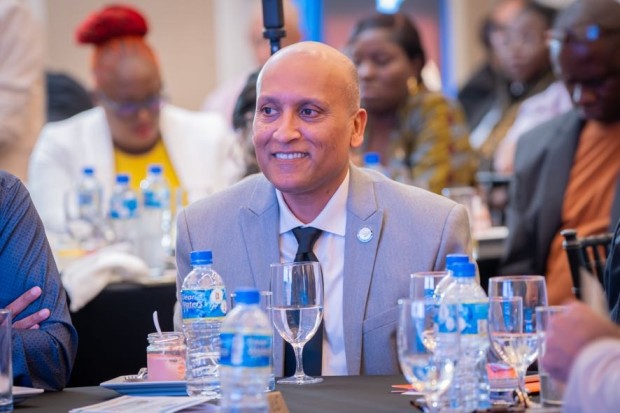
Why Rafeek Khan’s Business Advice Reflects the Reality of Caribbean Entrepreneurship
[CLICK HERE TO READ ORIGINAL ARTICLE]
The business lessons shared recently by Guyana Manufacturing and Services Association (GMSA) President Rafeek Khan are increasingly validated by independent international research, particularly in developing economies where entrepreneurs face high operational pressure, financing constraints, and rapid economic change.
During his address at a business luncheon, Khan focused on several themes that resonated with Guyanese entrepreneurs: passion, disciplined diversification, calculated financial risk, and building strong teams. While his remarks were grounded in personal experience, global studies show these principles are among the strongest predictors of SME resilience and sustainable growth.
Passion Remains One of the Strongest Drivers of SME Survival
Khan told attendees that passion is what keeps entrepreneurs moving “when things are not going right.” Research supports that position.
A study published in the Journal of Business Research found that entrepreneurial passion significantly improves SME performance. Passionate founders are more likely to persist through operational challenges, adapt during economic shocks, and remain committed to long-term development. Researchers described passion as a critical force sustaining momentum during difficult periods.
This becomes particularly relevant in Guyana’s current environment, where rapid growth opportunities also bring intense competition, staffing shortages, rising operational costs, and market volatility.
His Warning About Diversification Aligns With Global Business Strategy
One of Khan’s strongest warnings focused on businesses diversifying too aggressively and losing focus on core strengths. That position mirrors what international business researchers call “related diversification,” where companies expand within industries connected to their existing expertise rather than pursuing unrelated opportunities.
Khan illustrated this by referencing companies that successfully expanded within their existing sectors while maintaining operational specialisation.
Research published in Systems and other SME resilience studies shows that businesses diversifying within their core competency areas tend to outperform companies that overextend into unfamiliar industries. In Guyana, oil-and-gas-driven economic opportunities are encouraging businesses to expand rapidly into sectors where they may have limited operational experience, making the distinction consequential.
The Fear of Borrowing Continues to Hold Back Many Caribbean Businesses
Khan’s remarks about Guyanese reluctance to borrow reflect a recognised issue across the Caribbean SME sector. The Inter-American Development Bank has repeatedly identified limited access to financing and cultural hesitation toward borrowing as major obstacles preventing SMEs from scaling regionally.
Research into entrepreneurial resilience consistently shows that businesses with access to strategic financing are better positioned to invest in equipment, staffing, technology, and expansion. Khan’s comments about leveraging assets such as homes as collateral may be uncomfortable, but secured financing has historically been a feature of critical business growth phases globally.
His emphasis on calculated rather than reckless risk-taking aligns with modern SME governance principles. Studies examining post-pandemic SME recovery found that businesses willing to take measured financial risks adapted more successfully than those operating from fear-based decision-making. In Guyana’s expanding economy, access to capital increasingly determines whether businesses can compete for opportunities in construction, logistics, manufacturing, hospitality, and professional services.
Building the Right Team May Be More Important Than Individual Talent
Khan also told attendees that entrepreneurs should stop trying to do everything themselves.
“You are not gifted to do every single thing in your business.”
That reflects one of the clearer findings in global entrepreneurship research: collaborative leadership structures outperform founder-dependent businesses over the long term. A major SME resilience study published in PMC found that companies with strong management teams, delegated leadership structures, and collaborative operational systems were significantly more resilient during periods of crisis and rapid market change.
Khan’s observation that “dreamers and visionaries” often need executors, operational leaders, or joint venture partners aligns with what business strategy researchers describe as capability-based growth.
A Message Grounded in Discipline
Rather than promoting overnight success narratives, Khan’s address focused on discipline, sustainability, operational focus, and long-term thinking. As Guyana continues one of the fastest economic transformations in the Caribbean, many businesses face the dilemma he described: how to grow aggressively without losing operational focus or financial stability.
Passion may launch a business. Disciplined strategy, calculated risk, and collaborative leadership are what sustain it.
Read More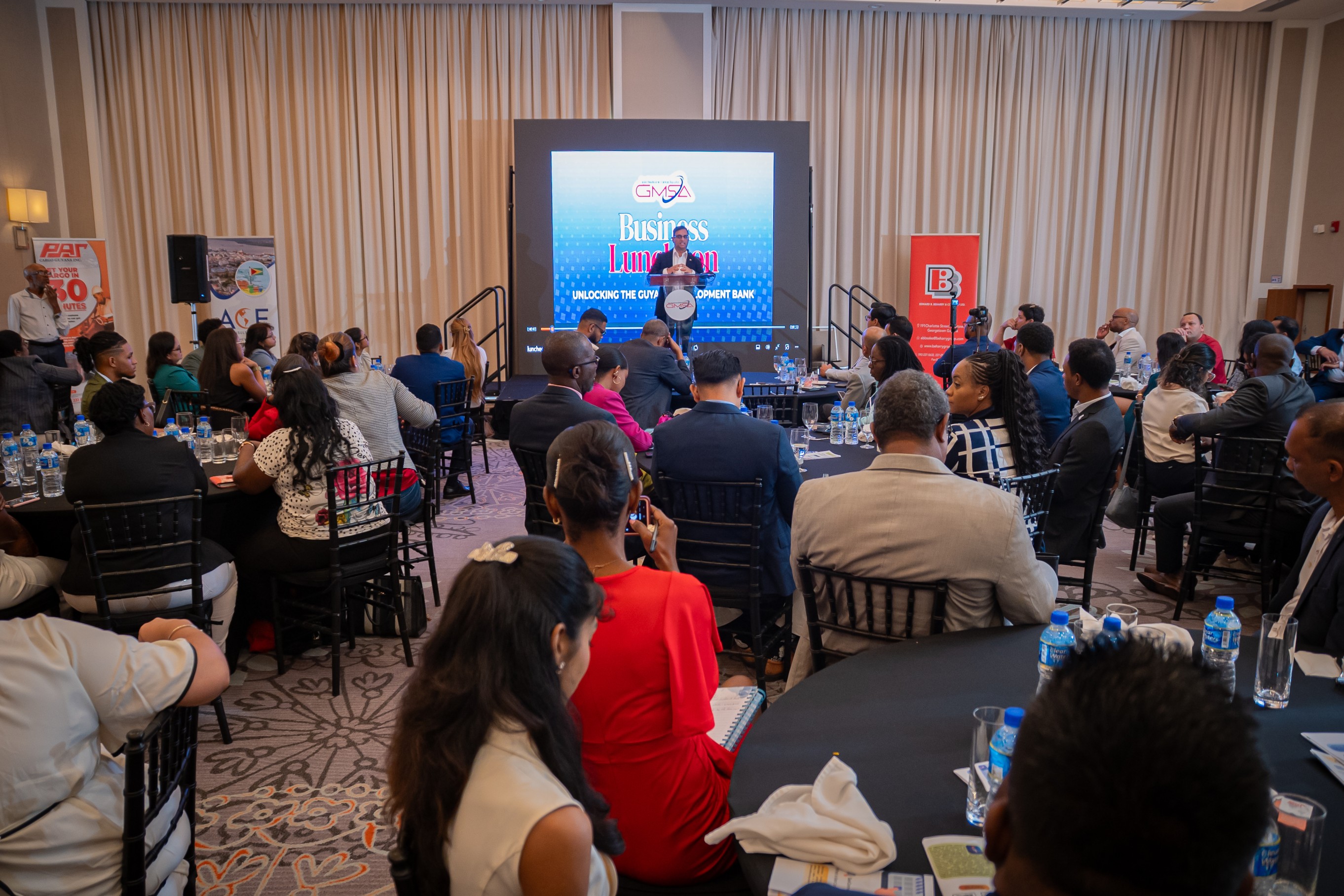
Detailed conditions for micro-loans from development bank
[CLICK HERE TO READ ORIGINAL ARTICLE]
The Minister of Government Efficiency, Zulfikar Ally, on Thursday listed several requirements to borrow zero interest and zero collateral loans of up to GY$3 million from the Guyana development bank when it opens its doors later this year.
Addressing a business luncheon hosted by the Guyana Manufacturing and Services Association (GMSA), he said the government would, among other things, be running a background check on the track record of loan applicants’ ability to pay their debts.
- Obtain credit score
- National Insurance Scheme compliance
- Guyana Revenue Authority compliance
- Digital identity card (preferably), though the existing identification card would also be accepted
- Detailed business plan
- Financial statements where applicable
- Proof of address
Mr Ally said the bank’s finances would be audited by the Auditor General, and he was optimistic that borrowers would repay their loans from the bank. “Every account will be audited. Every injection from the government will be laid through Parliament. All the finances will be tabled in Parliament,” he said.
There was, so far, no plan to put a cap on disbursements.
While the minister said the key sectors that would attract financing from the development bank are agriculture and processing, tourism and hospitality, hospitality services and trade, and the creative and digital industries, he provided no insight into the government’s plans to protect intellectual property. “That’s a whole new sector that we are currently looking at,” he said.
The plan envisages businesses growing to the point that they may need more money to borrow.
He said the bank would facilitate engagements with commercial banks. “We are working very closely with the banks so that when you come in, and we sit and we work with you, and we go through your proposal, and we train you and we help you with expanding your business idea, then we take you to the commercial banks if you need more than $3 million,” he said.
He said the development bank would assist borrowers with financial literacy training, mentorship, business development assistance, and technical guidance to improve managerial capabilities, enhance sustainability, and enable business expansion.
Pressed a number of times on sustainability of the Guyana Development Bank because there would be no collateral and loans would not attract interest, the minister ruled out putting a cap on the bank after several billion Guyana dollars had been disbursed.
He said the government would continue to finance it. “The government is doing this so that we can unlock the potential of a segment of our society that have brilliant ideas but can’t have access to financing to see those ideas happen. So the government will obviously continue to put money into the bank,” he said.
The minister said the government had been paying attention to the “tried and tested” development bank models in India and Bangladesh, such as the latter’s Grameen Bank, a pioneer micro-credit organisation, which requires no collateral for credit owing to the aim of alleviating poverty and empowering the poor.
Read More
Press Release: GMSA Elects New Board of Directors For 2026/2027
Georgetown, Guyana, May 21, 2025: The Guyana Manufacturing and Services Association (GMSA) is delighted to announce the successful election of its new Board of Directors for the term 2026/2027. The association’s Annual General Meeting (AGM), conducted in two parts, saw the election of the President and the appointment of key leadership positions within the organisation. On April 24, 2026, thirteen board directors were elected through an electronic voting process by members who attended in-person. On May 20, 2026, the President, three Vice-Presidents and Treasurer were elected. The remaining members were elected to form the Board of Directors inclusive of Chairpersons of the various Sub-Sectors.
Rafeek Khan, Managing Director of Durable Wood Products, was re-elected as President of the Association. He will be supported by Ramsay Ali, CEO of Sterling Products Inc.; Vasudeo Singh, Group Finance Director & Deputy Chief Executive Officer of Demerara Distillers Ltd. as Second Vice President and Treasurer; and Malisa Nokta, Finance Director and Company Secretary at Environmental Management Consultants Inc. (EMC) as Third Vice President. This diverse team and the expertise of the newly elected directors promise a vibrant and inclusive governance framework for the upcoming year.
Rafeek Khan is the founder and managing director of Durable Wood Products Inc. and DuraVilla Homes. He is a business developer with over 20 years’ experience in the timber industry involving sawmilling and manufacturing of building products used primarily for industrial residential construction. He served as President of the GMSA for two terms: 2022/2023 and 2025/2026. In his renewed tenure, Mr. Khan is focused on broadening the Association’s reach across a wider cross-section of Guyana’s rapidly growing economy, championing strong advocacy on behalf of members, and strategically positioning businesses to maximise the opportunities presented by the Government of Guyana’s development agenda through 2030 and beyond.
The 2026/2027 Board Members are as follows: –
- Durable Wood Products Inc. – Mr. Rafeek Khan, President of GMSA
- Sterling Products Ltd. – Mr. Ramsay Ali, First Vice-President, Chairperson of the Agro-Processing Sub-Sector
- Demerara Distillers Ltd. – Mr. Vasudeo Singh, Second Vice-President & Treasurer
- Environmental Management Consultants Inc. – Mrs. Malisa Nokta, Third Vice President
- Bounty Farm Ltd. – Mr. David Fernandes, Chairman of the Agriculture Sub-Sector
- Barama Company Ltd. – Mr. Neil Chand, Chairman of the Extractive Industries Sub-Sector
- Correia & Correia Ltd. – Dr. Marie Correia, Chairperson of the Construction & Engineering Sub-Sector
- Keen360 Inc. – Mr. Zahid Khan, Chairman of the Information, Communication and Technology (ICT) Sub-Sector
- EICCIO Advisers – Mr. Theon Alleyne, Chairman of Services Sub-Sector
- New GPC – Mr. Keshwar Singh, Chairman of the Chemicals & Pharmaceuticals Sub-Sector
- DENMOR Garment Manufacturers Inc. – Ms. Upasna Mudlier, Chairman of Textiles & Sewn Goods Sub-Sector
- Rid-O-Pes – Mr. Timoty Tucker, Chairman of the Trade, Investment& Legal Committee, Board Member
- Banks DIH Ltd. – Mr. David Carto, Board Member
- Brass Aluminum & Cast Iron Foundry Ltd. (B.A.C.I.F) – Mr. Peter Pompey, Board Member
- Edward B. Beharry & Company Ltd. – Mr. Raymond Ramsaroop, Board Member
- UMAMI Inc. – Mr. Chris Persaud, Board Member
- Comfort Sleep Inc. – Mr. Dennis Charran, Board Member
- Vista Holdings Inc. – Mr. Orson Ferguson, Board Member
- Amaya Milk Company Guyana Inc. – Mr. Omkaar Sharma, Board Member
- Bulkan Timber Works Inc. – Mrs. Roseann Bulkan, Board Member
- Kanoo (Guyana) Inc. – Mr. Chet Bowling, Board Member
The new Board of Directors is poised to build upon past achievements and set a strategic direction for continued excellence in serving the interests of Guyana’s manufacturing and services sectors.
-END-
Read More
GMSA hails growth of manufacturing sector, launches new programme for small business support
[CLICK HERE TO READ ORIGINAL ARTICLE]
Guyana’s manufacturing sector expanded by 20 per cent in 2025, and the Guyana Manufacturing and Services Association (GMSA) has rolled out a targeted programme to support small businesses capitalise on this growth.
At the GMSA’s Annual General Meeting on Friday, its President Rafeek Khan credited this growth to the strength and resilience of local businesses. He said the growth is a major achievement for the sector and underscored its role in employment and national development.
“That is a testament to every investment made, every production line expanded, and every product developed by our members,” Khan said.
Importantly, he noted that manufacturing remains a key pillar of the economy alongside a rapidly expanding services sector. Against this backdrop, the GMSA has moved to strengthen small and medium-sized enterprises (SMEs) through the inaugural Resilience, Innovation and Skills for Enterprise (RISE) Programme, which was launched on Wednesday.
Khan said the initiative is designed for Guyanese businesses, addressing real challenges in business readiness and competitiveness.
“It’s designed for Guyana, for the realities of doing business here, for the challenges our entrepreneurs face every day and for the extraordinary opportunities that exist at this moment in our national story,” he said.
Fourteen entrepreneurs are currently participating in the pilot programme, which provides training in critical areas including financing, pricing, sales strategy, pitching, and operational efficiency. The initiative aims to make businesses more bankable and better positioned to scale up.
Khan noted that the programme represents a shift toward deeper, more targeted support for members, with plans to expand its reach in the coming years.
Guest speaker, Agriculture Minister Zulfikar Mustapha, said continued growth in manufacturing is closely tied to developments in the agriculture sector, which is projected to expand by 7.9 per cent in 2026. He emphasised that agriculture remains a foundational driver of economic activity, supplying raw materials for agro-processing and manufacturing.
“Much of the growth in the manufacturing sector is in part driven by agriculture,” Mustapha said.
The minister added that the government is investing heavily to strengthen agro-processing capacity. He urged the Association to strengthen the integration between agriculture, manufacturing, and services, key areas for sustaining economic growth and unlocking new opportunities for businesses.
Read More
Press Release: GMSA and Water Manufacturers Engage Government on Advancing Local Bottled Water Production
Georgetown, Guyana, March 19, 2026: The Guyana Manufacturing and Services Association (GMSA), along with local bottled water manufacturers met with the Minister of Public Utilities and Aviation Hon. Deodat Indar and leadership of the Guyana Water Inc. (GWI), to discuss opportunities and challenges within Guyana’s water manufacturing sector.
In an effort to bring the cost of bottled water down for consumers, the GMSA welcomes His Excellency’s initiative to achieve 100% locally produced bottled water (HS 2201) in Guyana. The association highlights this as a strategic move towards self-sufficiency, estimating a potential reduction in imports by around GYD 150 million, which would bolster the local industry and foster economic growth. Participants stressed the crucial need for a unified approach among stakeholders and regulators to uphold consistent standards.
The meeting also provided a platform for dialogue on key areas impacting the sector, including:
- Production and distribution inefficiencies
- Policy measures and investment incentive
- Quality assurance and regulatory compliance
The GMSA is dedicated to collaborating with the Government and all industry stakeholders to enhance the bottled water industry in Guyana, focusing on quality and global competitiveness.
-END-
Read More

GMSA welcomes export incentive, again laments shipping woes
CLICK HERE TO VIEW ORIGINAL ARTICLE
The Guyana Manufacturing and Services Association (GMSA) has welcomed new export incentives announced in the 2026 National Budget, describing them as a timely measure to support local manufacturers.
In the budget presentation, Finance Minister Dr Ashni Singh announced that government will expand the list of products eligible for export allowances to include timber value-added products under the forestry subsector. The measure is expected to enhance the competitiveness of exporters by lowering their effective tax burden, allowing them to price goods more competitively in international markets while encouraging value-added production.
GMSA’s President Rafeek Khan said export incentives have long been advocated by the Association and welcomed the government’s decision to act on the proposal.
“The export incentive was a measure proposed by the Guyana Manufacturers and Services Association,” Khan said at a press conference on Wednesday.
Such a measure, he explained, was particularly crucial to help companies cope with the fallout from United States tariffs on Guyanese exports. Khan said local manufacturers initially absorbed some of the additional costs but were eventually forced to raise their prices.
“As you know, the US tariffs have really impacted exports to the United States. These export incentives will help cushion some of the additional costs manufacturers are having to pass on to consumers for the export market,” he said.
Despite the challenges, Khan said export demand has remained strong.
“So far, we have not seen any major pushback. Our export demand is continuing to grow,” he said.
He emphasised the importance of exports to national development, noting that without a strong export sector, economic growth and foreign currency earnings would be constrained.
“Without exports, we cannot grow our GDP in a certain manner, and we cannot get the foreign currency that we need. So we must keep improving exports,” Khan said.
Under the new incentive structure, companies exporting as little as 10 per cent of their output will qualify for benefits, with greater incentives available to firms exporting up to 75 per cent or more. Khan explained that the more a company exports, the greater the reduction in corporate taxes it can receive.
SHIPPING WOES REMAIN
Meanwhile, GMSA’s Vice President, Ramsay Ali said shipping costs remain one of the most serious challenges facing local businesses.
Guyana’s ports, Ali noted, are unable to accommodate larger vessels, forcing exporters to rely on transshipment through Trinidad and Jamaica. As a result, shipping costs have climbed sharply, nearly returning to post-COVID costs.
“It is almost US$10,000 to US$12,000 to ship a container from the quarries,” Ali said, compared to approximately US$6,000 before the pandemic.
Beyond cost, Ali highlighted the unreliability of shipping schedules, which has forced companies to hold larger inventories and invest in expanded warehousing.
To address these challenges, he said, collaboration is essential.
In response to rising international shipping costs, the Government announced in the 2026 Budget that it will once again extend its measure to calculate import taxes using pre-pandemic freight charges. First introduced in 2021, the policy has saved consumers more than $28 billion to date.
The measure will be extended for another 12 months, from January 1 to December 31, 2026, at an estimated cost of $6 billion annually.
Read MorePRESS RELEASE: Budget 2026: GMSA Says Manufacturing and Services Poised for Continued Growth
Georgetown, Guyana, January 27, 2026: The Guyana Manufacturing and Services Association (GMSA) welcomes the presentation of Budget 2026, delivered under the theme “Budget 2026: Putting People First,” and acknowledges the Government of Guyana’s continued focus on policies aimed at strengthening economic resilience, diversification, and inclusive growth.
Guyana’s economy expanded by 19.3% in 2025, with the non-oil economy growing by 14.3%. The GMSA notes in particular the strong performance of the manufacturing sector, which grew by 20%, and the services sector, which expanded by 8%, both of which contributed meaningfully to the expansion of the non-oil economy.
The Association recognizes the uncertainty in the global economic environment, influenced by geopolitical developments and external market volatility. Within this context, the GMSA notes that Budget 2026 includes measures intended to strengthen economic resilience and support longer-term diversification.
The GMSA further welcomes the inclusion of several policy measures submitted to the Ministry of Finance. These include: the removal of VAT on locally manufactured furniture, including doors, moldings, and beds; the revision of the export allowance to include value-added timber products; the removal of VAT on locally manufactured jewelry; the establishment of Special Development and Economic Zones to support export-oriented manufacturing; and the proposed establishment of a Junior Stock Exchange.
The Association also welcomes the planned establishment of a Development Bank, capitalised at US$100 million, with provisions for collateral-free financing of up to GYD $3 million for small and medium-sized enterprises, as well as the removal of corporate tax on agriculture and agro-processing.
The GMSA thanks the Government of Guyana for the presentation of the G$1.558 trillion Budget 2026, and the Association anticipate ongoing collaboration with policymakers to support a stable, competitive, and diversified economy, and to advance sustainable growth across Guyana’s manufacturing and services sectors. The government’s budget allocation, especially in housing, agriculture, agro-processing and technology, will positively impact our businesses directly as companies are assured of their expansion investments for the next five years and beyond.
-END-
Read More
Responsible policy-making essential for economic resilience – says Finance Minister
CLICK HERE TO READ TO ORIGINAL ARTICAL
Congratulating manufacturers and service providers last evening on their continued achievements in their respective industries as well as their contribution to Guyana’s growing non-oil economy, during the Guyana Manufacturing and Services Association’s (GMSA) 30th Anniversary Dinner and Awards Ceremony held at the Marriott Hotel last evening, Senior Minister in the Office of the President with Responsibility for Finance Dr. Ashni Singh assured the businesses that this government, led by President Dr. Irfaan Ali will continue to be a responsible government, and do all that is paramount to ensure that Guyana navigates the future and ensure its success and their success as investors. The Minister, who delivered the feature address, noted that this was especially since Guyana operates in an unpredictable world economic environment.
“Everybody has been alive long enough to remember an era when oil was US$138 a barrel and we should remember not only the era of oil being US$138 per barrel but we’ve also in recent memory lived through a period more recently when oil was as low as US$13 per barrel and the reality is that oil did not stay at US$138 per barrel for very long,” Minister Singh explained, pointing out further that just about two and a half years ago oil was US$98 per barrel.
“It’s not US$98 a barrel today, it’s closer to maybe sixty something dollars – a third less than it was two and a half years ago. That’s the reality of the world in which we live. Gold is, of course, an important contributor to our economy, and all of us in this room we celebrate the fact that gold today is US$4,000 an ounce, but we can all in this room remember a period when we were excited about gold even crossing the US$400 threshold and we can all remember a time when gold was just US$450 an ounce. Today it is US$4,000 an ounce. I don’t know who will wager whether it will remain at US$4,000 an ounce,” he explained.
The finance minister then alluded to freight prices, which he reminded have skyrocketed over the last five years.
“And so we must never forget that we live in a very uncertain and unpredictable period, and we know this as a government, and as a responsible government that recognizes the reality that we are living in an unpredictable world, and as a government that takes its responsibility seriously, and not only its responsibilities today and tomorrow, but its responsibilities next year and the year after that, and not only its responsibilities in this term of office but in the next term and the term after, and not only for this generation but the generation after, we as a responsible government have to be mindful of these global realities, “ Dr. Singh emphasized.
He added that as a commodity producing economy, one of the things that matter most is ensuring not only survival but ensuring the country’s success and the realization of its prosperity, notwithstanding these uncertainties long into the future.
Pivoting his address to things that should not be underestimated in relation to responsible policy-making, Dr. Singh explained to the forum that ‘we must never underestimate the importance of preserving the democratic credentials of our country and preserving our standing in the international community including the integrity of our financial system as part of an integrated, unavoidable, integrated global financial and economic system’.
He said that as the country celebrates its successes, it must never take these things for granted as it can quickly disappear if the democratic credentials of the country were ever allowed to be undermined.
Acknowledging the presence of the United States Ambassador to Guyana Her Excellency Nicole Theriot at the ceremony, the Minister said should Guyana take its current position for granted it can run the risk of becoming a pariah state, or a state isolated by those who traditionally have been its friends, such as the USA.
“We must also never take for granted the importance of macroeconomic stability and macroeconomic resilience. We must never take those things for granted, and when we speak of a resilient economy, we are speaking, of course, of an economy that has strong institutional structures, including now as an oil and gas producer, an economy with a strong natural resource fund, a sound sovereign wealth fund with clear and transparent governance arrangements and clear and transparent rules, for the management of the resources in that fund,” he further posited.
At this point he reminded the audience that Guyana stands today as one of the very few countries of the world that has accumulated in its sovereign wealth fund enough resources to be able to pay off the entire external debt of the country and still have cash remaining.
“But also, when we speak of resilience, we are speaking also of an economy that is more diversified and needs to be more diversified because we know that resilience can only be achieved if we diversify the sources of growth and the sources of macroeconomic and fiscal space and so you will hear us speaking incessantly about the importance of the non-oil economy, and importantly, the importance of a globally competitive non-oil economy,” the finance minister stressed.
It was here that he reminded the manufacturers, producers and service providers present that they are an important part of ensuring that this is realized.
“Irrespective of the sector in which you’re operating, you too have an important role in this mission to ensure that whatever we produce is globally competitive,” the Minister underscored.
“So, you will see in our fiscal priorities a very significant reorientation of the budget away from government consumption and towards investment in economic infrastructure that is critical to competitiveness,” Dr. Singh highlighted, reminding that in 2020 when government came into office, the public investment component of the capital budget in 2019 accounted for less than 25 percent of the total budget as he juxtaposed this to the public investment component of the budget in 2024 accounting for more than 50 percent of the overall National Budget because of government’s deliberate policy position.
“The policy position that we will not engage in inefficient government consumption but instead, focus on investing in the things that matter for long term economic growth and long-term prosperity and for long term competitiveness,” he noted.
The Minister then alluded to hard choices the government has to make in terms of the decisions as to what should be priority investments.
“Because investing in the things that matter for the long term are not necessarily the things that are most popular in the short term, but you have in President Ali’s government, a government that will not sacrifice the long term at the altar of short term or immediate term expediency,” he said sternly, adding that ‘it requires an explicit policy position, it requires strong leadership and a strong government to ensure that the right decisions can be realized, ensuring fiscal sustainability’.
“We will ensure that our economy continues to grow rapidly but to be equally clear, particularly in this era of soundbites and competing promises and counter promises, you have in this government, a government that is keenly focused on responsible economic policy-making because more so than any other time in our country’s history, that is what is needed, not soundbites. This is a serious time for our country. We need to be responsible, and we need to be strategic,” Minister Singh concluded.
Delivering remarks at the forum, President of the GMSA, Mr. Rafeek Khan said the GMSA is entering into the 4th Industrial Revolution (Industry 4.0) characterized by the fusion of physical, digital, and biological systems through technologies and genetic engineering, adding that this revolution is driven by data and connectivity, creating a new era of smart, automated, and interconnected systems. He added that it is a new era where the service sectors of the economy will be bridging the gap and driving the overall economic growth.
He pointed out that some of the major interconnected services to bridge the gap for manufacturing will include transportation and distribution, finance and Investment, communication, storage and warehousing and professional Services.
Mr. Rafeek thus urged that the GMSA, in preparation for the new wave of industrial development, prepare itself in order to serve its members and the overall growth of our new economy and at this point, he unveiled a future campus that he noted would bring value to all stakeholders.
“About 5 years ago I stood on this platform serving then as President of GMSA, and I echoed a voice from our President Dr Mohammed Irfaan Ali – to build consortiums. This is the only way for many Guyanese companies to realize the benefits of the major economic growth. Today I am pleased to say that we have witnessed successful consortiums formed with international companies within various sectors of the economy,” Rafeek posited.
Following this, former President of the GMSA, Mr. Ramsay Ali also unveiled the GMSA’s new website which allows online purchases from GMSA’s members. The website address is uncappedmarketplace.gy.
Under the PPP/C government, credit to manufacturing grew by 103.7 percent between 2020 and 2024, to $43.3 billion, with notable increases in lending for other construction and engineering, and beverages, food and tobacco subcategories.
Total private sector credit has also grown by 73.4 percent since 2020 to $450.6 billion at the end of 2024, with double-digit growth recorded over the last four years. Meanwhile, credit to services expanded by 80.3 percent over the same period, to $157.9 billion, driven mainly by growth in credit to the ‘other services’, transportation, professional services, telecommunications and distribution.
At the end of 2024, lending to the private sector grew to $450.6 billion, an increase of 19.8 percent when compared with the position at the end of 2023 and Government continues to work with financial institutions to improve loan accessibility for Small and Micro Enterprises (SMEs) ensuring they have the capital to expand operations.
In its 2025 Manifesto, government has emphasized the importance of economic diversification, support for productive sectors and enabling the private sector, particularly SMEs and has committed to make Guyana the industrial capital of the region through a number of commitments including completing the Gas to Energy (GtE) project and reducing electricity tariffs by fifty percent to consumers on the grid, thereby eliminating a key barrier to expanding the manufacturing sector, establishing a SME Development Bank to provide micro credit loans to SMEs at zero interest, completing the industrial estate at Wales which will host a vast complex of industrial and manufacturing enterprises including the manufacture of enough cooking gas to meet and exceed domestic requirements, construct a second such industrial estate in Region Six and work with the private sector to achieve full occupancy at existing soon to be completed industrial estates at Belvedere, Lethem, Onderneeming and York as well as establish a small business development complex in Georgetown to provide SMEs with organized spaces and proper infrastructure to grow and operate more efficiently among other initiatives in partnership with private sector bodies, including the GMSA.
Also, in attendance at the GMSA’s dinner and award ceremony was Minister of Public Works, Bishop Juan Edghill.
Read More